

Transportation is the infrastructure of recovery
A missed ride means a missed dose, a missed session, or a missed chance at sustained recovery. For SUD and opioid treatment programs, reliable transportation is not a convenience\u2014it is a clinical necessity that determines whether treatment can work.
Grant-Funded Program Support
Federal and state funding for SUD transportation is growing through SAMHSA State Opioid Response (SOR) grants, HRSA grants, opioid settlement funds, and Medicaid waivers. Ride Health helps programs deploy these dollars into rides quickly and track every trip back to its funding source.
Flexible Funding Configuration
Support multiple funding streams within a single program. Configure rides by grant source, eligibility criteria, service type, and authorization rules so each dollar is tracked to the correct funding mechanism.
Ride-Level Cost Tracking
Every ride is tagged with the funding source, cost, and associated service so your team can produce the grant-level expenditure reports that SAMHSA, HRSA, and state agencies require.
Rapid Launch
Grant timelines are tight. Ride Health can stand up a transportation program within weeks, not months, so you can start moving clients to treatment before your grant period runs short.
Data & Outcomes Reporting
Pre-built reporting on ride volume, completion rates, treatment attendance, and cost per client that maps to common grant reporting requirements and helps demonstrate program impact at renewal time.
Purpose-built for complex ride coordination
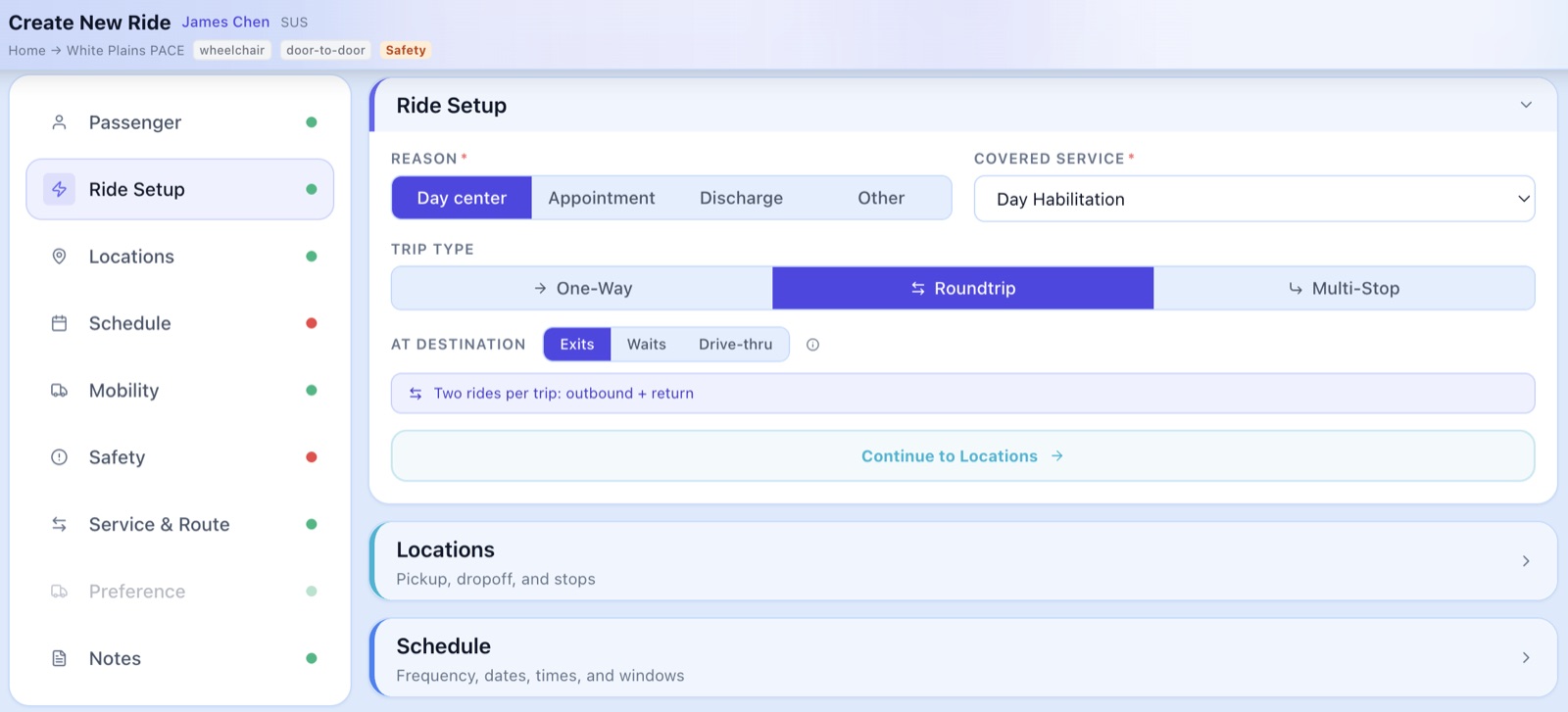
Every detail about a passenger — mobility, communication, behavioral needs — shapes how rides are planned and executed.
1 / 3
Create Ride — Setup
Configure ride details, assign passengers from your roster, and set pickup/drop-off locations in a single streamlined workflow.
What Ride Health Delivers
Purpose-built transportation operations for the unique clinical, regulatory, and logistical demands of SUD treatment and recovery programs.
Confidentiality-Aware Operations
42 CFR Part 2 governs the confidentiality of SUD treatment records. Ride Health operates with privacy protocols that prevent inadvertent disclosure of treatment participation through transportation records, driver communications, or billing data.
Relapse-Aware Support
Recovery is not linear. When a client misses a ride or a pattern changes, Ride Health flags it for your care team rather than simply marking a no-show. This early signal can be the difference between re-engagement and loss to follow-up.
Multi-Stop Recovery Journeys
A single day in recovery often involves multiple stops: MAT dosing, individual counseling, group therapy, and pharmacy. Ride Health coordinates multi-leg trips so clients can complete their full treatment plan without arranging separate rides for each stop.
Rural & Underserved Coverage
The opioid crisis hits hardest in communities with the fewest transportation options. Ride Health builds networks that reach rural and underserved areas where public transit does not exist and ride-hail coverage is sparse.
Transportation Within the Recovery Ecosystem
Recovery depends on a system of interconnected services. Transportation is what makes that system accessible.
Treatment Retention
Clients who can reliably get to treatment stay in treatment longer. Transportation removes the most common logistical barrier to consistent attendance at MAT, counseling, and recovery support programs.
MAT Reduces Overdose Risk
Medication-assisted treatment is one of the most effective interventions for opioid use disorder, but only if clients can access it consistently. Reliable transportation to daily or weekly dosing appointments keeps the treatment working.
Transportation Connects the System
Treatment, housing, employment, and peer support programs only work when clients can physically reach them. Transportation is the connective tissue of the recovery ecosystem, linking services that are otherwise isolated by distance and infrastructure gaps.